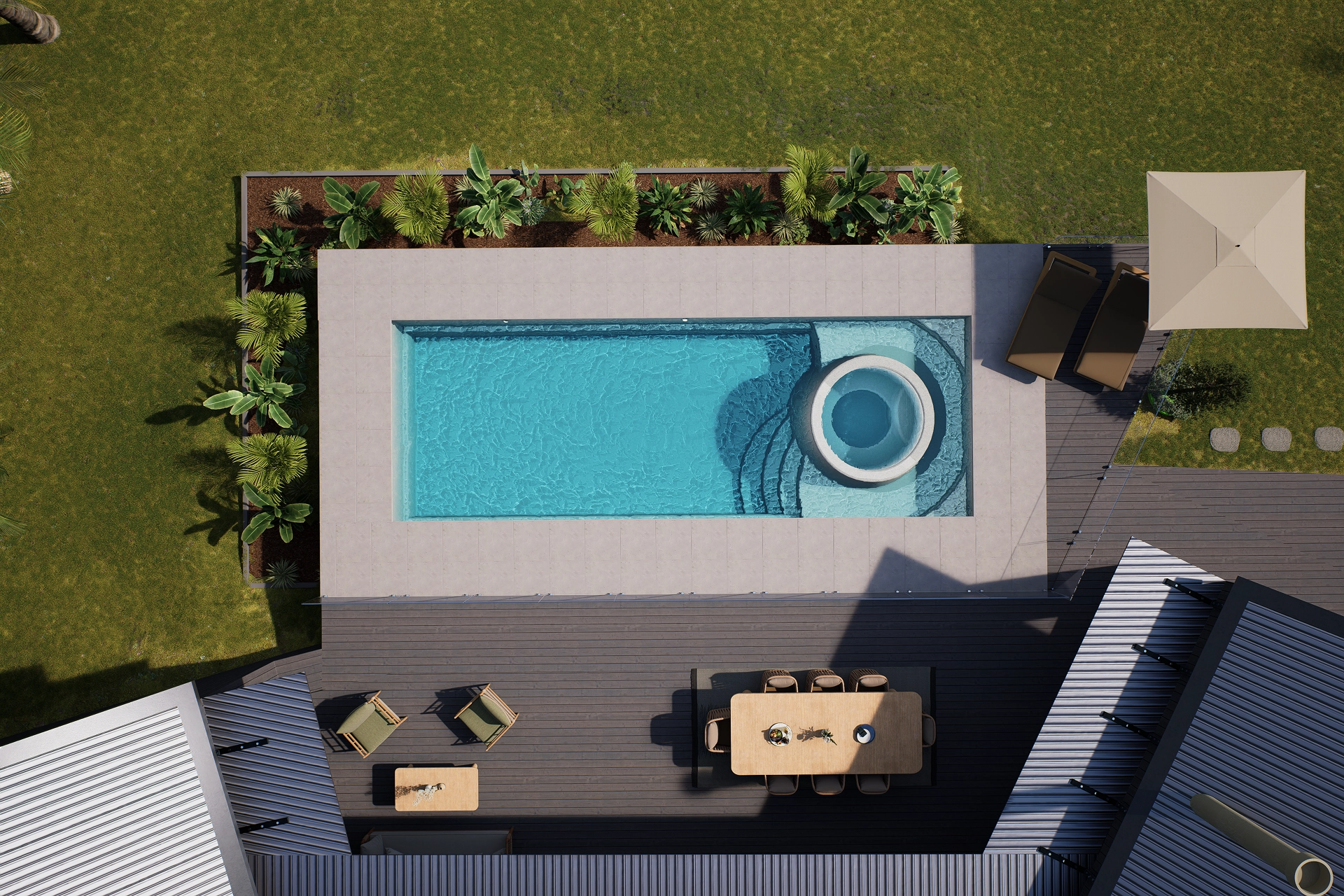
The short answer: In 2026, a fibreglass pool in Australia typically costs between $57,000 and $70,000 installed for a standard 7 x 3 metre family pool. Smaller plunge pools start from around $50,000, and large pools or pool-and-spa combinations reach $85,000 or more. Your final figure comes down to four things: the quality of the shell, the inclusions, your location, and your site.
That is the headline. But a single number hides the most important part of the story, and it is the part almost no other pricing guide will tell you honestly: the cheapest pool and the best value pool are not the same product, any more than the cheapest car and the best value car are. A $55,000 pool and a $70,000 pool can look identical in a brochure and deliver completely different experiences over the five, ten, twenty or thirty years you own them.
I have reviewed more than 3,000 pool quotes across Victoria, New South Wales and Queensland. If you are an Australian homeowner, especially in Victoria, South Australia or Queensland, and are weighing up a durable, low-maintenance fibreglass pool and wanting clear pricing without hidden extras, this guide lays out the real 2026 numbers. Broken down by size and by state, it shows you exactly what changes as the price climbs. It also covers equipment and pool quality, installation, warranties and support, site-cost variables, surrounds and upgrade pricing, running costs, finance, comparisons with other pool types, and how a pool can add value to your home. From there you can see where your money is actually going before anyone digs a hole in your backyard.
2026 fibreglass pool price snapshot
The table below shows installed pricing for a straightforward, flat block with the pool in the ground and the equipment running. It does not include surrounds (paving, coping, fencing or landscaping), which we cover separately further down, because those depend entirely on the size of the area you finish. Each range runs from the budget end of the market to a genuine quality build.
| Pool size (hero model) |
VIC |
SA |
QLD |
Typical spend |
| Plunge pool, 3m - 5m (Brighton) |
$54k-$65k |
$51k-$63k |
$50k-$62k |
$55k-$60k |
| Small-mid family pool, 6m - 7m (Lorne) |
$59k-$74k |
$55k-$70k |
$53k-$68k |
$64k-$69k |
| Large family pool, 8m+ (Portsea) |
$63k-$85k |
$58k-$78k |
$60k-$78k |
$70k-$75k |
| Pool + spa combination (Peninsula) |
$90k-$120k |
$85k-$120k |
$85k-$115k |
$98k-$108k |
How to read this: the low end of every range buys a budget shell with basic inclusions and, often, a contract full of provisional sums. The high end buys a premium shell, quality equipment with real warranties, and a fixed price. A fully optioned quality 7m x 3m in Victoria lands around $71,000. The sections below explain exactly what separates those two ends.
What does “installed” actually mean? At a minimum, every one of these prices includes the fibreglass shell installed in the ground to Australian Standards, a concrete bond beam around the top (roughly 380mm wide and 200mm deep) ready for your coping tile, and all the equipment installed and running. Some builders include a coping tile, and some do not. Beyond that baseline, inclusions vary enormously, and that variation is most of the price difference you see.
Why prices differ between Victoria, South Australia and Queensland
The same pool genuinely costs different amounts in different states, and the reasons are real-world, not arbitrary. The two biggest drivers are labour costs, which commonly include pool install, concreting, plumbing and electrical work and vary by state, and third-party costs such as tip fees (the cost of dumping the excavated soil), which vary significantly by council and state. Material prices also shift with freight and where things are manufactured.
A useful comparison: In Queensland, concrete pools cost about the same as fibreglass. In New South Wales they typically run around 30% more expensive, because labour and material costs are higher. Queensland also has easier, less costly council approvals and permits, which takes some pressure off the price. Pool pricing in Victoria and South Australia are quite similar, both sitting around 20% more than Queensland.
The quality ladder: what you are paying for
This is the section that matters most, and the one the cheap end of the market would rather you skipped. As the price climbs from the budget end to the quality end, here is what changes.
The shell
There are many manufacturers, and how they build differs vastly. Some put fillers into their fibreglass and composites to reduce the amount of expensive raw material used. The quality of the pool shell and its gelcoat surface also affect durability and maintenance. Others use pure materials with no fillers. Shell thickness varies, as does the age of the moulds. A mould that has been flipped and used every other day for ten or twenty years becomes bent and warped, and the pools that come off it are slightly out of shape, which causes problems on install and cracking down the track. Walk into different factories and the difference is obvious, some look like a backyard operation, others are spotless with serious quality control. Every company claims their shell is the best. They cannot all be right, and a few minutes searching online for complaints about gel coat fading and colour problems will tell you who is not. You can then ask whether the finish uses a non-porous gelcoat surface, because that helps deter algae over the long term.
Tip: If you are considering buying from a local company, ask to have a tour of their factory so you can see for yourself.
The equipment
Most builders fit third-party equipment, and the warranty is the clearest signal of how confident the manufacturer is in it. A 12-month warranty and a 5-year warranty reflect completely different levels of confidence. Quality matters for running costs too: a good variable-speed pump runs at a fraction of the cost of a cheap single-speed unit. Standard pumps and chlorinators commonly need replacement every 4–6 years, so equipment quality affects ownership cost. Think of it like a Bose speaker, it costs more because it lasts longer, integrates properly and works better. Some fibreglass pools can also include a vantage self-cleaning system, which can cut weekly cleaning time to under 30 minutes and reduce reliance on suction cleaners. Pool equipment is no different. I had a pump fail 14 months after my own pool went in, just outside warranty, and had to buy a new one. People fixate on the headline number at the start and forget what happens years later.
Construction and project management
Is the build run by a project manager who keeps you informed, or a loose network of subcontractors and pool builders? Even with a faster shell-based process than concrete, fibreglass pools still require excavation, plumbing, and electrical work. Does the company stick to its schedule? Does it build to Australian Standards, as many do not? None of this appears as a line item, but it makes or breaks the job. The pool shell itself is typically craned into place in a single day when access allows.
Fixed price versus provisional sums
This one alone can separate the bottom and top of the range. The simplest way to win a contract is to hand the customer a low upfront cost without them fully understanding what is, and is not included, then recoup the margin through variations, provisional sums, and miscellaneous expenses once work is underway. A company that does the work up front, scopes the job accurately and holds its price gives buyers a clear view of the total cost before excavation begins, which is a very different experience. And here is the catch with the cheap version: once someone has dug a hole in your backyard, there is no accountability left. They can effectively charge what they like, because the job is not finished until you pay.
| Element |
Budget end |
Quality end |
| Shell |
Fillers, thinner, cheap gelcoat, ageing moulds |
Pure materials, premium gel coat, new moulds, thicker shells |
| Equipment |
12-month warranty, basic single-speed pump, basic equipment, no app or automation |
5-year warranty, variable-speed, integrated automation at your fingertips |
| Contract |
Provisional sums, variations mid-build |
Fixed price, tip fees included |
| Support |
Handed over at completion |
Lifetime 7-day customer support |
| Build |
Subcontractors, may not meet Australian Standards |
Project-managed, built to Australian Standards |
Where Summertime sits, and why a quality pool costs more
We deliberately sit at the top of that ladder, in the upper third of the price ranges above. Our shells are made from brand-new moulds. We use no fillers in our gelcoat or fibreglass. We use ChlorShield gel coat, which is the most expensive on the market and, in my view, the benchmark and made by a company with 40 years of fibreglass gelcoat experience and rated at 10x the Australian Standard. It costs a fortune to apply. We apply it anyway, because our craftsmanship and build quality are not about winning a contract to install a pool, we are trying to build a pool a family loves for thirty years.
There is a reason our pools cost more, and it is the same reason a Porsche costs more than a Hyundai: there is simply more in it and extra features. The shell, the equipment, the inclusions and the way we build to Australian Standards all sit at the top of the market.
The thing most people get wrong about pool cost: a pool goes into the home you own, usually your single biggest asset, and you cannot swap it, change it or replace it without enormous expense. If your home is worth two million dollars and you spend $80,000 on a pool, in ten years you will not remember whether you spent $80,000 or $70,000. What you will remember is whether you had a good ownership experience. In the Pool Owners Australia Facebook group, with over 220,000 members, there is a post every week from someone who chose the cheapest quote and regrets it. We make quality decisions on every other product we buy. For some reason, people forget to with pools.
What should be included, and what should never be an “extra”
Here is what we include as standard that many builders quietly leave out, turn into a variation, or charge for separately:
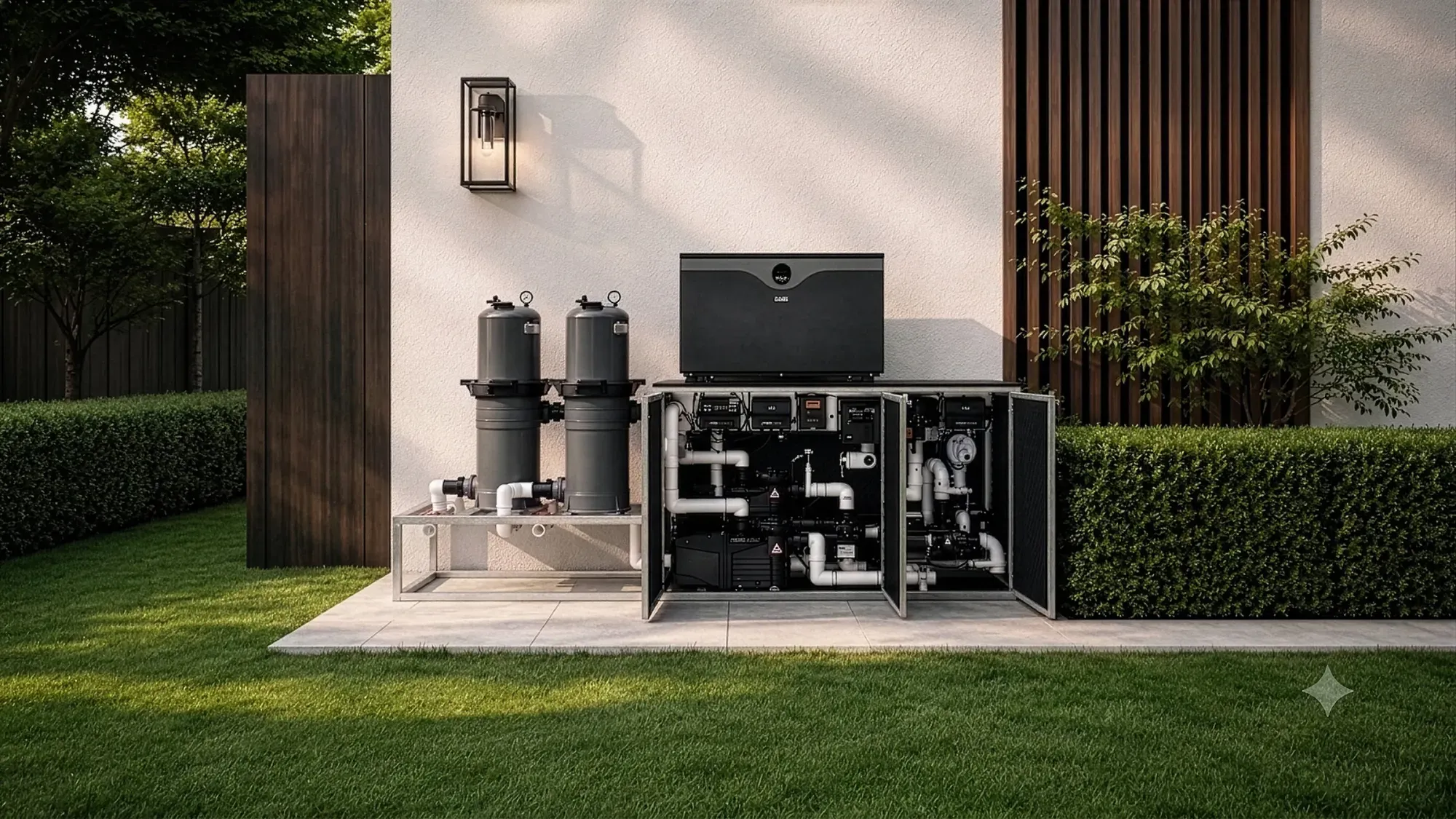
- HushHub Control acoustic equipment enclosure. Equipment left out in the weather fails early, and in some states an acoustic enclosure is already mandatory. I think it should always be included. When I built my own pool, the builder pointed at the equipment on the last day and said “you need to cover that to protect it from the weather”; it then cost me $2,700 and a year of delay, during which my pump failed.
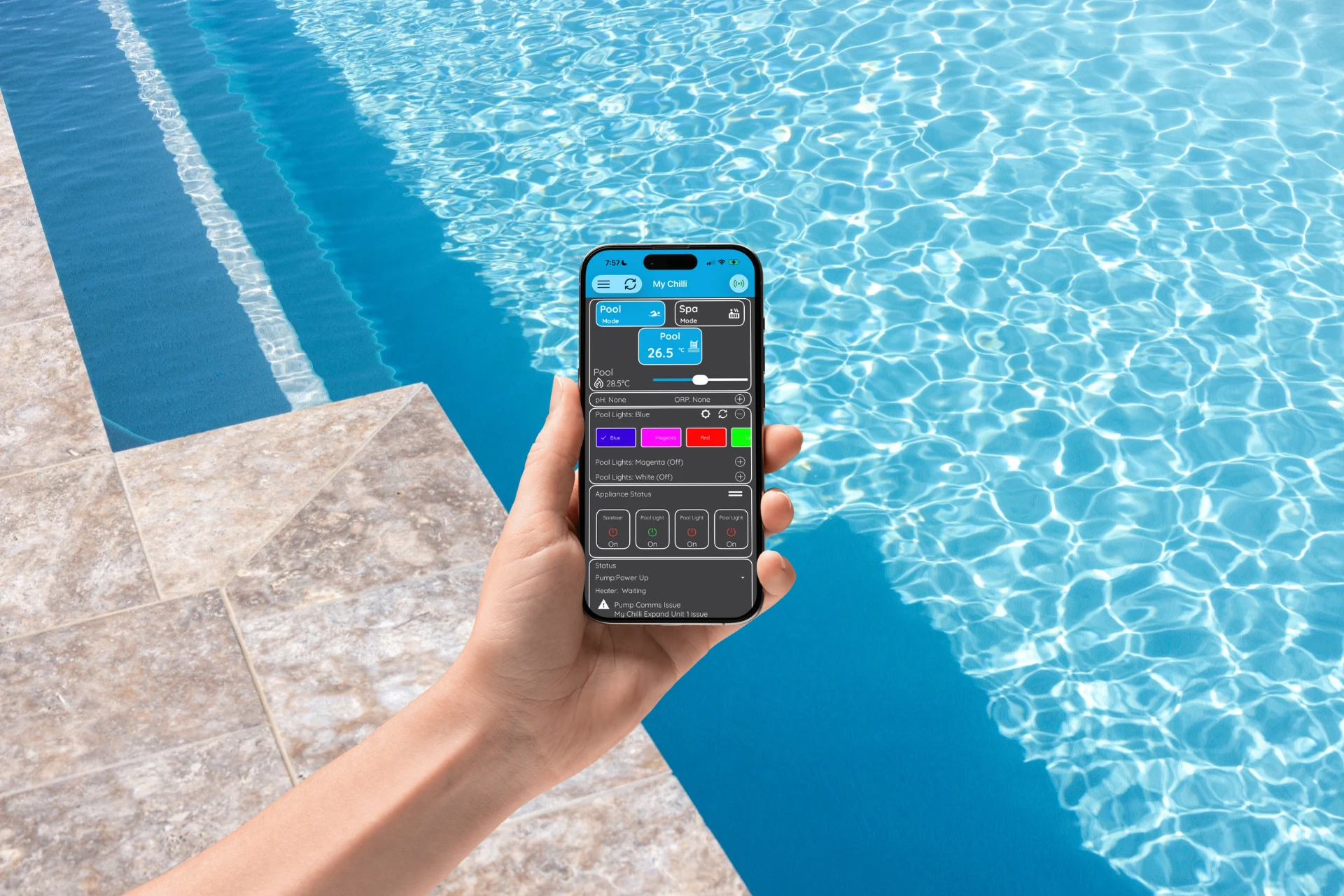
- Full automation with app control of everything in your pool. With most builders this is a separate automation kit you must buy.
- A 5-year equipment warranty. You simply cannot get that from most builders.
- Lifetime customer support, seven days a week. Call us any day about your pool and we will help.
- ChlorShield gel coat. The surface of your pool cannot be changed later without major expense, and it will never look as good again. You have to get it right at the start.
- A genuine fixed price, with tip fees included. Many builders make tip fees a provisional sum or exclude them, because council rates differ. We include them. You would rather sign a contract for $68,000 and pay $68,000 than sign for $60,000 and end up paying $68,000.
- Rock insurance. If you are in a known rock area, you can buy rock insurance with us for $3,000, which caps what you pay even if the dig runs for days.
The hidden costs nobody quotes you
The single biggest trap is the provisional sum. Builders who have not done the work up front to scope a job will drop provisional sums into the quote for surrounds, tiling, fencing, concreting, and, most dangerously, excavation. Excavation is the biggest risk point on any project, because nobody knows what is under the ground until they start digging. Leaving it as a provisional sum is genuinely dangerous, which is why getting a fixed-price fibreglass pool quote with no surprises matters so much.
Then comes the variation. When something needs to change, the builder issues a variation, and most customers do not realise how few rights they have at that point, legally or practically. Practically, there is a person who has put a hole in your backyard and will not finish it until you pay. The most common move I’ve seen is not leaving things out, it is lowballing a provisional sum: quoting $3,000 for an excavation the builder knows has never come in under $6,000. The customer thinks they have a cheap quote when really they do not.
What changes your price: site conditions
Two things move the needle most: what is under the ground (soil conditions, rock, fill and water table conditions), and access. They are linked, because both come down to time. On a wide access path of two metres or more you can bring in a large digger, move dirt fast and break up rock efficiently. Squeeze down to 1.2 metres and you are on small machinery, and that same rock becomes a slow, expensive job. Clean fill digs out quickly and cheaply; contaminated fill or rock adds both excavation time and dumping fees, so a clear pool installation process and timeline that accounts for these factors up front is critical.
We do not mind tricky access. Many builders inflate those jobs heavily just to avoid them. We recently did a 900mm access job that turned a one day dig into a three day dig and added about $8,000 for the customer, and it ran fine. On sloping sites, retaining walls may also be required, which can materially add to the budget.
On craning: every price in this guide already includes a Franna crane, which has a 17-metre lift and covers most sites. Once you go beyond 17 metres you need a specialist crane, and a larger lift of around 40 metres typically adds $4,000 to $6,000. Critically, none of this should ever be a provisional sum. Access and crane requirements are knowable up front, if the builder does the work up front.
Fibreglass vs concrete vs precast
In Queensland and South Australia, the right pool type can put fibreglass and concrete surprisingly close on price for a 7m x 3m pool, though the concrete range is wider: concrete pools start at roughly $55,000 and can reach $85,000 depending on the builder and inclusions; at the low end you get a poor product, often without the waterline tiles a concrete pool should never go without. Concrete also gives more freedom for complex shapes, which is one reason some buyers still choose it despite higher upkeep. In Victoria, concrete typically runs 15-20% more than fibreglass, and many families opt for fibreglass pools in Queensland because they balance upfront price, speed of build and long-term running costs.
On timeline, fibreglass wins comfortably. To bond beam stage, a fibreglass pool is typically done in four to eight working days. The equivalent stage in concrete is a minimum of six to eight weeks, and realistically eight to ten. From dig to swim, a fibreglass pool can have you swimming within about seven days of the dig starting. At that same point a concrete pool has, at best, been boxed up and steel fixed, with no concrete poured yet.
Fibreglass is also cheaper to run. It is a natural insulator with a smooth surface, so algae does not take hold the way it does on concrete, which means less heating, chemicals and cleaning labour. Fibreglass also needs no annual retiling or liner replacement. Long term maintenance costs also favour fibreglass at about $1,500 a year on average. While concrete maintenance can reach about $1,150 per year, it often needs resurfacing every 10-15 years under typical warranty expectations, which usually means more money over time. Concrete pool warranties are usually around 7 years, whereas fibreglass warranties are typically 25 or 30 years.
Precast concrete can be a more affordable option. You might save around 20% on a small pool such as a 6m x 3m (roughly $40,000 to $48,000), but only if a truck can drive up and drop it in. These pools are extremely heavy (a 6m x 3m plunge can weigh seven or eight tonnes empty versus under a tonne for a fibreglass shell), so the moment you need a large crane, the saving disappears when you get an bill for $15k for the crane lift. And 6m x 3m is about the largest precast you can get.
Surrounds: paving, coping, fencing and decking
There is no honest single “cost breakdown” for surrounds, because the cost depends entirely on how much area you finish. So instead of a made up figure, here are the real rates, and one worked example off a standard 7m x 3m pool to help you think through everything you should consider before getting a pool.
Most people put a minimum of 800mm (sometimes 1.2m) down three sides of the pool and around 2.4m at one end, which gives room for sun lounges or an umbrella and a table and chairs. The first 400mm around the pool is the pool coping. On a 7m x 3m that is 20 linear metres of coping.
| Element |
Typical rate |
Notes |
| Coping (supplied + installed) |
~$230 / lineal m |
e.g. $80 tile + ~$150 install. 30mm stone |
| Tiled paving, finished |
$530-$600 / m² |
Concrete base + tile + install + sundries |
| Frameless glass pool fencing |
$400-$450 / lineal m QLD/SA; incl. gate |
$550-$650 / lineal m in VIC/NSW; incl. gate |
| Slatted fencing |
~$200 / lm |
Aluminium / steel |
| Timber / composite decking |
$1,000-$1,200 / m² |
Usually also requires building permits |
| Concrete sleeper retaining wall |
~$700 / lineal m |
Under 1m height; more if engineered |
Worked example, standard 7m x 3m surround: 20 linear metres of coping at around $230/m comes to roughly $4,600. Add about 12 m² of field paving at $530-$600/m², roughly $6,400-$7,200. That is a finished, tiled surround of around $11,000-$12,000. 29 lineal metres of frameless glass fencing at $450/m adds another $13,050, making the total for paving and fencing around $24k on top of the pool, not including basic landscaping. A point on coping: a metre of coping costs about what a full square metre of paving does even though it only covers 0.4 m², so it is always priced separately, never at the paving rate.
Upgrades and what they cost
Beyond the pool itself, here is what the popular upgrades add:
| Upgrade |
Typical cost |
| Heat pump (9kW to 35kW) |
$4,500 to $14,000 (a 16kW is around $6,990) |
| Standard chlorinator (handles mineral/magnesium) |
$1,500 - $2,500 |
| Freshwater system (copper/zinc or UV, ~900ppm) |
$3,500 - $5,000 |
| Intelligent pH + ORP automation (vs a $500 "dumb" doser) |
$2,000 - $4,000 |
| Automation "brain" kit (app control) |
$2,000 - $6,000 |
| Robotic cleaner (a decent one with 3-yr warranty) |
$1,700 - $3,500 |
| In-floor cleaning (fibreglass) |
$8,000 - $14,000 |
| Pool cover, manual roller |
$2,500 |
| Pool cover, recessed/hidden (installed) |
$6,000 - $10,000 |
A note on heating: around 90% of pools now go out with electric heat pumps rather than the solar or gas that were popular ten years ago. When comparing heating systems, a gas heater still suits buyers who want very fast spa heating, but it is expensive to run. Heat pumps are energy efficient, pair brilliantly with rooftop solar, and heat far better in cold weather than black-pipe solar. Salt water pools are generally cheaper to run than traditional chlorine pools. On lighting, the industry benchmark is the Spa Electrics Argon LED range, which is what we use. And be wary of the cheapest robotic cleaners: a $795 unit often will not outlast its warranty, so budget around $1,700 or more for one worth owning.
What does a fibreglass pool cost to run each year?
Across Australia, a fibreglass pool typically costs between $1,200 and $2,500 a year in ongoing costs, covering chemicals, electricity and basic servicing, and more if you heat it heavily or use a professional service. Concrete can cost more to maintain each year, while vinyl lined pools may need liner replacement over time. Fibreglass sits at the lower end of pool running costs because its non-porous gelcoat surface needs less heating, fewer chemicals and less cleaning than concrete.
Equipment choice is the biggest controllable cost. An old single speed pump can cost $900 to $1,200 a year in electricity alone, while a modern variable speed pump can cut that to around $200 to $400, another reason a complete, efficient pool system at the quality end of the market is cheaper than it looks once you own the pool. By contrast, a vinyl pool in an average sized pool format can look affordable upfront, but a vinyl liner brings periodic costs that do not apply to fibreglass; vinyl-liner replacement is one of them.
Real Summertime projects and what they actually cost
Ranges are useful, but real jobs are where the fixed-price promise gets tested. Here are projects with their actual numbers.
A tight-access plunge pool in Wynnum, Brisbane
Janelle signed a contract for a 5-metre plunge pool at her home in Wynnum. The contract value was $86,545.37, and she paid exactly that, on time, on budget. Here is how it broke down:
- Pool and inclusions (installed, with equipment): $57,645
- Additional crane: $2,060
- Freshwater system upgrade: $1,200
- Spa jets: $1,500
- 27 m² of concrete slab, plus removal of existing concrete, trees and pavers: $8,374
- Concrete pump (needed for the volume of concrete): $1,296
- Tight-access works (about 1,250mm access; we craned the digger and the pool in over the neighbour's property): $7,980
This was a complicated job with several tricky parts, including a second crane lift to bring the digger over at the start and the pool over a few days later, things some of her cheaper quotes had simply left out. We did the work up front, quoted it accurately, and held to that number. Janelle has since left a positive Google review and remains happy with her experience to this day.
A loaded front-yard pool in Brisbane
This 7 x 4.2-metre pool had excellent front yard access, so no crane was needed. The customer upgraded to the freshwater system and full automation, added four spa jets with actuator valve control via the Summertime app, and chose an extra 32 m² of concrete with a drop-edge beam because the pool sits 500mm out of ground. The total came to $87,000 in Brisbane:
- The pool itself: $68,000, including HushHub, seven-day support, a V-lock skimmer lid, electrolysis protection, ChlorShield gel coat, Wi-Fi app automation, the Chili balanced pH and ORP controller and a 16kW heater
- Concrete slab, drop-edge beam and associated works: $16,000
- Freshwater system upgrade: $2,500
Strip all of those upgrades back out and that same pool comes in around $10,000 cheaper, which shows why the factors influence the final price far more than shell size alone.
A quality family pool in Drouin, regional Victoria
Ben signed a fixed-price contract for a Lorne 6-metre family pool at their home in Drouin, in Gippsland. The contract value was $69,934, and that is exactly what they paid, with no variations. Here is how it broke down:
- Pool package and inclusions (installed, with equipment): $66,354.
- Equipment upgrade to a magnesium mineral system with pH and ORP automatic dosing and Chilli Connect app control: $2,500
- Larger-reach crane (Level 2 pool placement, 17m to 22m): $1,030
- Delivery: $550
- Less water allowance: -$500 (customer elected to fill the pool with their hose)
On top of that fixed price, the June promotion included a 16kW Chilli heat pump (RRP $6,990) and a Maytronics Dolphin DB2 robotic cleaner (RRP $2,500) at no extra cost, alongside the standard HushHub enclosure, ChlorShield gel coat, Wi-Fi automation, electrolysis protection and lifetime seven-day support. It is a high quality Victorian family pool: a mid-size Lorne with the upgrades most owners actually want, landing just under $70,000 on a fixed price.
A medium-size family pool in Salisbury Heights, Adelaide
Sam signed a fixed-price contract for a Lorne 7-metre family pool at Salisbury Heights, in Adelaide's north. The contract value was $67,774, and that is the figure paid, start to finish. The breakdown:
- Pool package and inclusions (installed, with equipment): $60,694
- Recessed pool cover (Lorne 7m precision-cut cover with a 4m underground blanket box): $4,750
- Delivery and freight to South Australia: $3,300
- Pool placement allowance: $1,030
A 16kW heat pump (RRP $6,990) and the Maytronics DB2 cleaner came in free through a promotion, alongside the mineral sanitation system, HushHub, ChlorShield and lifetime support. This build also shows the freight difference we mentioned earlier: getting a shell to Adelaide added $3,300, one of the real reasons South Australian pricing sits where it does.
Financing your pool
If pool buyers would rather not draw on their mortgage, the most common finance option in the industry is HandyPay, but I personally recommend Parker Lane, because the rates I saw were more competitive over many applications. Both are unsecured personal loans. As an indicative guide, a $55,000 pool on a 10-year term through Parker Lane works out to around $642 a month at current rates, and most buyers compare finance options against the upfront cost of their preferred pool option when funding a new pool, especially when they can lock in a fixed-quote fibreglass pool package with bonuses. The biggest finance related regret most pool owners report is not the repayments, it is that they did not get the pool sooner.
Does a pool add value to your home?
Demand is not in doubt. “Pool” is consistently the most-searched keyword on realestate.com.au, searched nearly 270,000 times over six months in New South Wales alone, around five times more than the next term, “waterfront.” Roy Morgan research shows roughly one in seven Australian households (about 14%) has a pool or spa, with ownership highest in regional Queensland at around 24% and 19% in Brisbane.
On dollar value, being careful with national averages, the uplift depends heavily on where you live and how sought after pools are in your region. In my experience, a well built, well designed in ground pool in South East Queensland can add in the order of 10-13% to a home's property value, and modern fibreglass designs can add significant value to your home when they are planned well. A sensible rule of thumb: to stay ahead on resale, keep the pool to no more than around 10% of your home's value. On a million-dollar home, that means spending no more than about $100,000 to be confident of a positive return.
How to get an accurate quote (and the red flags)
A real quote starts with a real site visit, and a good pool builder should inspect the site before pricing. If nobody has come to your home, measured extensively, taken levels on any slope, and drawn up your site, it is a guess, not a quote. A quote over the phone is a guess. Whoever quotes you should turn up with a laser level and tape measures, draw up and confirm your site, already know where your sewer, stormwater and underground electrical services run, understand the council regulations, and check any boundary fence you intend to use as a pool barrier. That matters whether the job is in metro areas or regional Victoria.
The red flags are just as clear. Vague inclusions are the big one. “A salt chlorinator” is not an inclusion, which brand, what warranty, what specification? “An led light”, which one? If a quote is a one page Word document with no detail, assume the equipment is cheap and will need replacing, and run far away. In over 3,000 quotes, the single most reliable warning sign was a builder who would not put the detail of what they include in writing.
The Summertime difference: Our own shells and our timeline
We manufacture our shells in house, which means we know exactly what goes into our product and we control our own supply chain. That is how we can commit to a 12 week completion promise (from contract signed through to bond beam and handover; it does not include tiling and fencing, which we do not always do). Most pool companies run a dealer or franchise model: a manufacturer sells to franchisees or dealers who do not hold the warranty and often do not know how the shell was built. When something goes wrong, everyone points fingers, and your contract is with a small dealer who may turn over a couple million a year and has no capacity to support a major warranty claim. Our 30-year structural shell warranty covers the structure of the shell, and yes, the warranty is backed by our entire business. Many buyers look for lifetime structural warranty-style peace of mind, and whether cover can transfer to future owners matters too. Transferability to new owners can matter for resale confidence.
By the numbers: The business has operated for more than 30 years, but when Rob Kruber bought Summertime Pools in 2020, it was producing about 50 pools a year. Six years later, Summertime installs around 700 pools a year, holds more than 500 five-star reviews, and manufactures over 1,000 shells annually. You do not grow like that by cutting corners on the product, and our story as a growing Australian pool company is built on that focus.
About the Author.